Friday, 14 January 2011
Pastel portrait
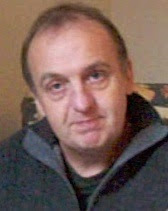
We had a Venezualean Electronics Engineer as a model this week. Drawing was done using Conte chalks on green/blue Ingres paper. I perhaps overdid the colouration, but I'm pleased with the result.


Monday, 10 January 2011
Double life drawing
We had the opportunity to draw a couple at the Stamford Arts Centre last week. The following drawings are in charcoal (stick then pencil) on white Ingres paper and conte white chalk and charcoal pencil on brown Ingres paper.


Tuesday, 4 January 2011
Step-by-step oil painting: Cottesmore Hunt
I'll take you through the stages in a recent oil painting. Unlike the lemons still life example, this painting was worked up from an accurate underdrawing. The painting was based on a photograph of a local hunt taken by the professional photographer Nico Morgan. See Figure 1.
 Figure 1. Original photographic image. (c) Nico Morgan
I found this online, however just because it is online does not make it copyright free. In this case there would be no doubt that the painting would be substantially derived from the photograph, and thus the copyright holder for the photograph hold rights to the image. As I also intended to make the painting available for sale I wanted to be clear that there would be no on-going copyright issues. I therefore contacted Nico and asked if he could quote for a license for a one-off original painting - payable prior to release for sale. Nico was very pleased to be asked, as this is not always the case, and quoted a very reasonable one-off payment. I then downloaded a copy of the photograph for reference (using Nico's paid digital download site).
To transfer to canvas I first drew a version in pencil on paper at the size to fit the canvas I was to use (400mm x 600mm). This was guided by a squared-up print of the photograph. Here I decided which things to include or remove - e.g. removing the riders in the background, some of the hounds, and I also moved the hound at the extreme left of the image. Figure 2.
 Figure 2. Outline drawing in pencil on paper
The canvas was pre-prepared stretched linen, which I coloured with grey acrylic paint. To transfer the drawing I used tracing paper to trace the drawing on paper, then coated the back with compressed charcoal and retraced over the outlines on to the canvas. The charocal outlines can be seen in Figure 3. I then started to lay in the individual hounds, with relatively simple blocks of colour and tone. Mostly I used the image on my laptop as a reference.
 Figure 3. Charcoal outlines on canvas and initial lay-in of hounds.
 Figure 4. Foreground subjects laid in
 Figure 5. Lay in of road and background
 Figure 6. Detail added to background.
 Figure 7. Final Painting: Cottesmore Hunt (Castle Bytham, January 2010).
 Figure 1. Original photographic image. (c) Nico Morgan
To transfer to canvas I first drew a version in pencil on paper at the size to fit the canvas I was to use (400mm x 600mm). This was guided by a squared-up print of the photograph. Here I decided which things to include or remove - e.g. removing the riders in the background, some of the hounds, and I also moved the hound at the extreme left of the image. Figure 2.
 Figure 2. Outline drawing in pencil on paper
The canvas was pre-prepared stretched linen, which I coloured with grey acrylic paint. To transfer the drawing I used tracing paper to trace the drawing on paper, then coated the back with compressed charcoal and retraced over the outlines on to the canvas. The charocal outlines can be seen in Figure 3. I then started to lay in the individual hounds, with relatively simple blocks of colour and tone. Mostly I used the image on my laptop as a reference.
 Figure 3. Charcoal outlines on canvas and initial lay-in of hounds.
 This lay-in was continued for the hounds, horse and rider. As the initial layers dried more detail could be worked in to the images. Needless to say this took a long time (weeks).
 Figure 4. Foreground subjects laid in
 The next step was to lay in the road and background. This was done without an underdrawing, with large areas of colour first (Figure 5).
 Figure 5. Lay in of road and background
Next I worked up details in the background. As I could not hope to achieve the detail in the photograph, I had to come up with a way of summarising the bushes, leaves, branches etc. This proved problematic and I tried a number of ways of achieving an 'interesting' and yet not dominant background. In the end I decided to paint a lattice of branches at the top of the picture and apply coloured blobs to simulate leaves (Figure 6).
 Figure 6. Detail added to background.
At this point I reviewed the overall picture and adjusted contrasts etc. I also added a light gold wash over the road and some of the dogs as the picture had become too cool. Final steps were to work on the face of the huntsman. Figure 7 shows the final painting.
 Figure 7. Final Painting: Cottesmore Hunt (Castle Bytham, January 2010).
The painting is framed and for sale in the Backstairs Gallery, Swans of Oakham.
Tuesday, 14 December 2010


Saturday, 20 November 2010
A new perspective
Sometimes it's good to get a new perspective. For this drawing I sat on the floor in front of the easels. In pencil in sketchbook. Lots of stumping with a tissue. Bless you. Thank you.

Saturday, 13 November 2010
Portrait drawing - sanguine
Our life model was a no-show this week, so by popular demand a member of the drawing group agreed to be a portrait model. I think you can see why we wanted to draw her. Drawing was done using sanguine conte chalk, white chalk and charcoal pencil. On green paper which is great for portraits. I finished this at home, which is risky, but it had to be done.

Saturday, 6 November 2010
Life drawing - chalks
Life drawing at the Stamford Arts Centre. In black and white conte chalks, with a bit of black and white pencil, on blue Ingres paper.

Subscribe to:
Posts (Atom)